Wrinkle Relaxer Cost in Melbourne: Units, Doses and What to Expect to Pay
Wrinkle relaxers are priced by the unit, not by the millilitre (ml). Most treatment areas need roughly 10 to 25 units, and published Australian price guides typically place a single area at about $165 to $400, with larger muscles such as the masseter costing more. Your exact cost depends on the areas treated, the dose your muscles need, and the practitioner’s experience.
If you’re comparing prices in Doncaster or Melbourne’s eastern suburbs, this guide explains what a “unit” is, why ml is the wrong measure, how much is typically used for each area, and how to compare quotes fairly.
Why Wrinkle Relaxers Are Measured in Units, Not ml
The medication in wrinkle relaxers is botulinum toxin type A. It’s supplied as a dry powder in a sealed vial, and the clinician mixes it with sterile saline before use. The strength of the medicine is measured in units of biological activity, not by volume.
This matters because the same number of units can be mixed into different amounts of saline:
- A more concentrated mix means fewer ml for the same dose.
- A more diluted mix means more ml for the same dose.
So “how many ml did I get?” isn’t a useful question. Two clinics can inject very different volumes and still give the same number of units. The question that tells you what you actually received is “how many units?”
One well-known example from published product information: a 100-unit vial mixed with 2.5 ml of saline gives 4 units in every 0.1 ml. At that dilution, a 20-unit treatment for frown lines is 0.5 ml, and a 24-unit treatment for crow’s feet is 0.6 ml. Other clinics and products use different dilutions, so treat this as an illustration, not a rule.
Units are not interchangeable between brands. Product information for botulinum toxin products states that the unit doses of one product can’t be compared or converted to another’s. A clinic quoting 20 units of one product and a clinic quoting 20 units of another are not necessarily offering the same strength. This is one of the main reasons price-per-unit comparisons can mislead.
Typical Units and Cost by Treatment Area
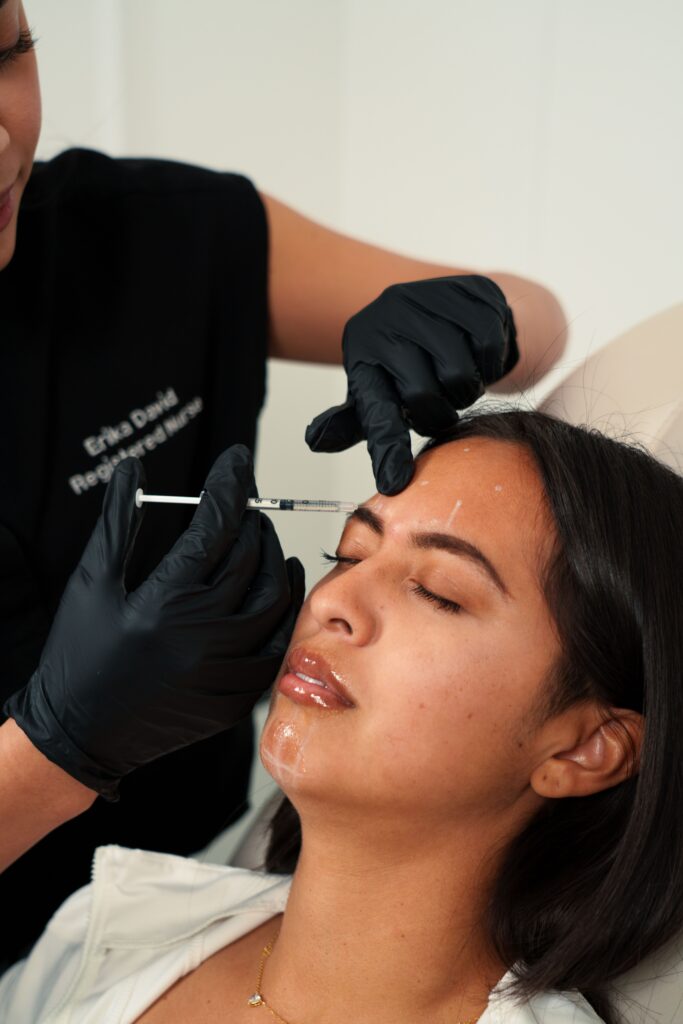
Doses vary with muscle size, strength and your treatment goals. The table shows commonly used ranges and indicative Australian pricing.
| Treatment area | Typical units | Indicative price range (AUD) |
|---|---|---|
| Frown lines (between the brows) | 20 units | $200 - $400 |
| Forehead lines | 10 - 20 units | $165 - $300 |
| Crow's feet | 24 units (12 per side) | $200 - $400 |
| Brow lift | 2 - 4 units per side | $165 - $200 |
| Masseter (jaw clenching / teeth grinding) | 25+ units per side, varies widely | $750 - $800 |
| Gummy smile | Small dose, varies | around $120 |
Unit ranges reflect standard product-information dosing for the upper face. Price ranges are indicative only, drawn from published Australian clinic price guides, and vary between clinics. Loving Glow Aesthetics pricing is confirmed at your consultation.
A few points that help make sense of the numbers:
- Upper face areas have well-established dosing. Product information commonly cites about 20 units for frown lines, 24 units for crow’s feet and 10 to 20 units for forehead lines.
- Treating areas together often changes the plan. Forehead lines are usually treated alongside frown lines to keep the brow balanced, so these two areas are commonly planned as a pair.
- The masseter costs more because it’s a large, strong muscle that needs a much higher dose.
Factors That Affect What You Pay
1. Treatment areas. More areas means more units and a higher total.
2. Muscle strength. Stronger muscles often need more units. Men, on average, tend to have stronger facial muscles and may need higher doses.
3. Depth and type of lines. Lines caused by muscle movement respond best. Lines that are etched into the skin at rest may need complementary treatments as well, which adds to the overall cost of getting the result you want.
4. Product used. Different botulinum toxin type A products are priced differently, and their units aren’t interchangeable.
5. Practitioner experience and qualifications. Experience with facial anatomy affects precision and safety. This is the factor most worth paying for.
6. Consultation, review and follow-up. A fair price includes a proper assessment and a plan for what happens if you need an adjustment. Some clinics include a review at around two weeks, and others charge separately.
7. Location and clinic overheads. Prices differ between CBD clinics, suburban clinics and medical practices.
Why the Cheapest Quote Isn't Always the Best Value
Under-dosing is one of the most common reasons results feel short-lived. A very low price can mean a lower dose, a diluted product, less time with the practitioner, or fewer safety checks. If results wear off in eight weeks instead of twelve, you’ll be paying for treatment more often.
A more useful comparison is cost per month of result, not cost per visit. If you’d like to understand how long results usually last, our guide on how long wrinkle relaxers last explains the biology and the typical timeline.
If you live or work in Doncaster, Doncaster East, Templestowe, Bulleen, Box Hill, Balwyn, Kew or the wider Manningham area, you don’t need to travel into the CBD for a thorough, evidence-informed consultation.
Loving Glow Aesthetics provides personalised wrinkle treatment plans at Doncaster, Melbourne, close to Doncaster Road and Westfield Doncaster. Book a consultation here.
Frequently Asked Questions
Published Australian price guides typically place a single treatment area at about $165 to $400, with larger areas such as the masseter costing more. Your exact cost depends on the areas treated and the dose you need.
It varies by area. Product information commonly cites about 20 units for frown lines, 24 units for crow’s feet and 10 to 20 units for forehead lines. Your practitioner tailors the dose to your muscle strength.
Volume depends on how the product is mixed, so ml isn’t a reliable measure of the dose. As one example, at a dilution of 4 units per 0.1 ml, 20 units is 0.5 ml. Ask for the number of units instead.
Both models are used in Australia. Per-unit pricing shows exactly what you receive, while per-area pricing is simpler to budget for. Either way, you should be told the units used.
Differences usually reflect the product used, the dose, practitioner experience, what’s included in the price, and clinic overheads. Because units aren’t interchangeable between products, the per-unit price alone doesn’t show the full picture.
Often yes. On average, men tend to have stronger facial muscles, which can require higher doses.
Not always. A low price may reflect a lower dose or fewer safety checks, and results that wear off sooner can cost more over a year.
Most people return every 3 to 4 months, so two to four visits a year.